Prof. Man-Rong Li's team at School of Chemistry successfully predicted and experimentally realized the discovery of exotic perovskite-related polar magnets under extreme conditions
Source: School of Chemistry
Edited by: Wang Dongmei
Synthesis under extreme conditions such as high-temperature and pressure (HTP) is esteemed as a unique approach in physics, chemistry, geology and material sciences. The distance between atoms/molecules is shortened under HTP, which significantly enhances the interaction between them, and thus inner electrons of the atoms can participate in bonding, resulting in emergent structures and physical properties. For example, in 2015, German scientists M. I. Eremets et al. discovered high-temperature (203 K) superconducting in H2S at 90 GPa; In 2019, Drozdov's team at the Max Planck Institute of Chemistry in Germany reported that lanthanide hydride compounds became superconductors at 170 GPa and 250 K; In 2020, American scientists R. P. Dias et al. observed almost room-temperature (288 K) superconductivity at 267 GPa in LaH10; I. Silvera et al. experimentally for the first time reported metal hydrgon at 495 GPa in 2017. HTP synthesis method has drawn more and more prominence in many fields. Exotic perovskites are a new category of multifunctional materials but rare, due to the limitation of highly distortion structures (small tolerance factor t). Recently, more and more exotic perovskite materials have been stabilized by HTP synthesis, especially polar magnets for spintronics applications.
The conventional HTP preparation by trial-and-error is a costly time-consuming process and requires lots of repetitive experiments. Therefore, the precise prediction and synthesis of exotic perovskite-related polar magnets under HTP are highly desired. Mostly, the metastable high-pressure state can be maintained by temperature-quenching of the HTP synthesis process. The metastable exotic perovskite phase usually undergoes pressure-dependent structural transitions, which makes it hard to precisely control the synthesis parameters for anticipated polymorph and properties. Therefore, it is essential to perform precise prediction of the synthesis parameters and conressponding crystal structure and properties, for structure- and function-oriented HTP preparations. In recent years, with the dramatic development in data accumulation and computing power, it has become possible to accelerate the discovery of new materials using big data-mining and high-throughput calculations (HTC) methods.
Prof. Man-Rong Li's team at the School of Chemistry in Sun Yat-sen University successfully predicted and experimentally realized the discovery of exotic perovskite-related polar magnets under extreme conditions through big data-mining and HTC. A new R3-type polar magnet Co3TeO6 was precisely proposed and synthesized at 5 GPa and 1123 K. The related results titled as "Data-driven computational prediction and experimental realization of exotic perovskite-related polar magnets" was recently published in npj Quantum Mater. (2020, 5, 92). The workflow of the big data-mining and HTC is shown in Fig. 1a. The authors calculated the pressure-dependent polymorph evolution of A3TeO6 (Fig. 1b, A = Mg, Mn, Fe, Co, Ni, Cu, and Zn), and singled out the high-pressure Co3TeO6 (denoted as HP-CTO) polymorph for experimental realization.
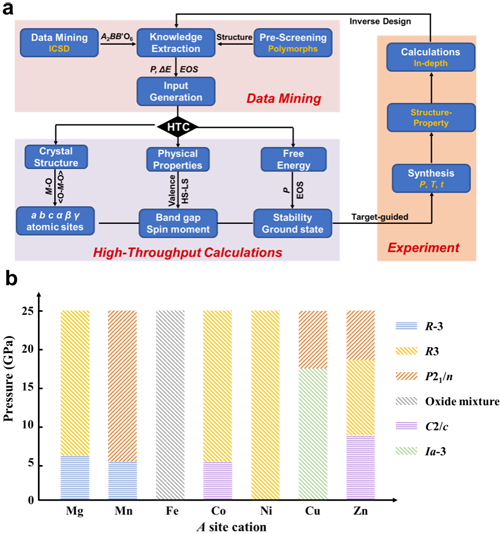
Figure. 1 Discovery of exotic perovskite related materials via data-driven approach.
(a) The workflow of function-oriented searching (composition screening) and designing of new exotic A2BB’O6 materials via seamless integration of data-mining, HTC, and experiment.
(b) Predicted pressure dependent polymorph evolution of A3TeO6.
The ambient pressure phase of Co3TeO6 falls in the nonpolar C2/c space group with an antiferromagnetic transition temperature TN ~ 30 K. Theoretical predictions indicate that Co3TeO6 will transform into a polar R3 phase HP-CTO around 5 GPa. The estimated ferroelectric domain reversal energy barrier of HT-CTO is comparable to those of reported counterparts, suggesting potential multiferroic behavior. Subsequently, the authors precisely synthesized the polar magnet HP-CTO under 5 GPa and 1123 K. The as-made HP-CTO demonstrates two magnetic transitions at T1 ~ 24 K and T2 ~ 58 K, respectively. The M-H curves below transition points (5 and 50 K) show complex variable magnetic response. The results of the powder neutron diffraction experiments illustrate that HP-CTO has a helical magnetic sequence structure along the c-axis below the T2 transition temperature as shown in Fig. 2.
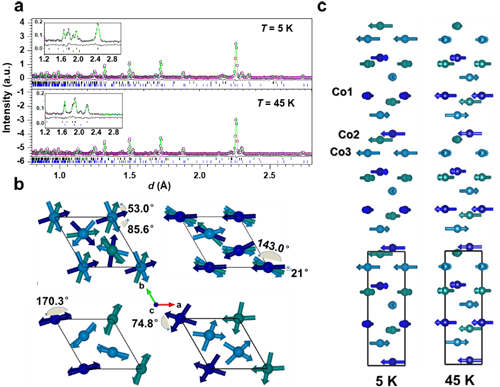
Figure. 2 Magnetic structure of HP-CTO determined from in situ variable temperature powder neutron diffraction measurements.
The magnetoelectric coupling results of HP-CTO are displayed in Fig. 3, showing an intrinsic anomalous peak in the dielectric constant at T2 ~ 58 K (Fig. 3b), below which the polarization intensity starts to increase. The electric polarization in HP-CTO cannot be switched as the direction of the applied poling electric field is reversed, therefore, the nature of HP-CTO is pyroelectric, rather than ferroelectric (Fig. 3c). HP-CTO exhibits the coupling effect of polarization and magnetic field derived from magnetostriction. The detailed magnetoelectric phase diagram of HP-CTO is plotted in Fig. 3 based on the magnetic and electrical results (Fig. 3g).
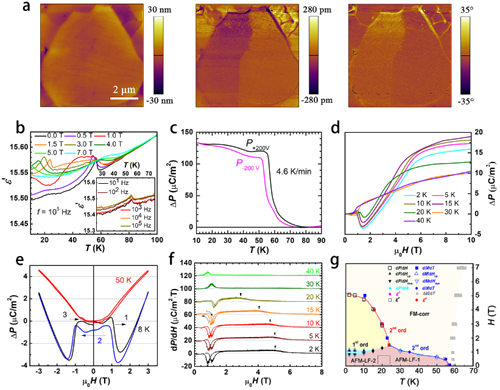
Figure. 3 Physical properties of HP-CTO.
The ultimate goal of computation-assisted identification of new materials is to predict stable (metastable) compounds under complex conditions by combining crystal structures and specific properties, especially compounds that are difficult to obtain through conventional experiments, to achieve precise function-oriented synthesis and accelerate the discovery process of new materials. Big data-mining and HTC enable rapid prediction of stable crystal structures, providing an efficient search for materials with optimal properties. This work verifies that big data-mining and HTC methods can be applied to guide the design and synthesis of new exotic perovskites, providing a valuable reference for the study of exotic perovskite materials with excellent electrical and magnetic properties. Later work is tailored to a wider variety of materials besides exotic perovskites and enable large-scale screening of new materials in the near future.
This work was financially supported by the National Natural Science Foundation of China (NSFC-21875287, 21801253, and 11804404), and the Program for Guangdong Introducing Innovative and Entrepreneurial Teams (2017ZT07C069).
Link to the paper: https://www.nature.com/articles/s41535-020-00294-2





 COPYRIGHT?1999-2017 , SUN YAT-SEN UNIVERSITY