Source: Cancer Center
Written by: Cancer Center
Edited by: Wang Dongmei
The basic research and theranostics for cancer have entered the age of big data. The development and application of various omics databases provide great help in dissecting the molecular mechanisms of tumorigenesis and cancer progression, exploring the new theranostics technologies, and sharing the data resources.
Recently, Dr. Rui-Hua Xu’s team dedicated their efforts to construct the big data platform for digestive system cancers. Through integrating the clinical information, imaging data, biobank data and various omics data, they comprehensively constructed the big data for digestive system cancers and systematically analyzed the data by artificial intelligence platform. Based on the cancer big data platform, Xu team performed the real world clinical studies, explored the precise diagnostics, prognostics, and studied the mechanisms of metastasis and drug resistance. The studies yielded a series of findings which were published in distinguished journals such as Nature Materials, Gut, etc.. Recently, Xu team developed the qPhos database for protein phosphorylation dynamics in humans (http://qphos.cancerbio.info). As a part of the cancer big data platform, the establishment of qPhos could provide critical resource for the cancer precision medicine research.
As one of the most important post-translational modifications (PTMs), protein phosphorylation is involved in almost all biological processes and plays physiological and pathologicalroles in cancers and diseases. Phosphorylation is reversibly catalysed by kinases and phosphatases, which are popular research areas for the development of target therapies. Recently, the advancement of high-throughput proteomics techniques greatly promoted the profiling and quantification of the phosphoproteome in various cells and tissues under different conditions. Several pioneering studies have contributed to constructing resources to host phosphorylation-related data, the database for the quantification of phosphorylation is still absent. Since the quantification/stoichiometry/dynamics of phosphorylation are critical for the molecular mechanisms under different temporal and spatial contexts, a comprehensive resource for protein phosphorylation quantificationcould facilitate the reuse of published quantitative phosphoproteome datasets and provide great help for phosphorylation-related studies.
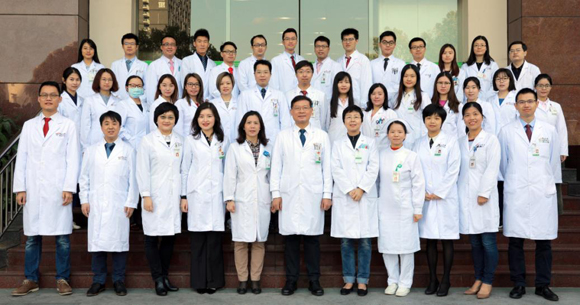
The Xu team at Sun Yat-sen University Cancer Center
Since 2016, the Xu team at Sun Yat-sen University Cancer Center started to develop the database of qPhos for protein phosphorylation dynamics. 3,537,533 quantification events for 199,071 non-redundant phosphorylation sites on 18,402 proteins under 484 conditions were curated and integrated into the database, while 86% of the data was from tumor samples or related cell lines. Various annotations such as sequence and structure properties, potential upstream kinases and their inhibitors were provided, coupled with details about the quantification including the experimental condition, phosphopeptide enrichment method, mass spectrometry and raw peptide. In addition, the annotations from databases such as UniProt, ExPASy and DrugBank were integrated into the qPhos database to provide comprehensive information for phosphorylation events. The experimental verified kinase-substrate relationships and potential relationship were also integrated to provide clues for molecular mechanisms. Based on curated activity-related phosphorylation sites, the qKinAct service was developed to dissect the kinase activity profile from phosphoproteome data. Thus, qPhos could serve as a one-stop database to investigate phosphorylation dynamics.
On November 1st, 2018, this study was published with the title ‘qPhos: a database of protein phosphorylation dynamics in humans’ in top bioinformatics journal of Nucleic Acid Research (Impact factor 11.561). Dr. Rui-Hua Xu and Ze-Xian Liu are the co-corresponding authors, master students including Kai Yu, Qingfeng Zhang and Zekun Liu and postdoc Dr. Qi Zhao are the co-first authors.
Paper link: https://academic.oup.com/nar/advance-article/doi/10.1093/nar/gky1052/5150235