Building a Green Great Wall at the desert's edge
As the world marks the World Day to Combat Desertification and Drought, Sun Yat-sen University (SYSU) has been leading a shelterbelt forest project in Maigaiti County since 2019. Situated on the edge of the Taklamakan Desert, one of Asia's most ecologically fragile zones, the initiative aims to establish an ecological barrier to stabilize sand dunes and restore native vegetation, exemplifying global efforts to reverse desertification.

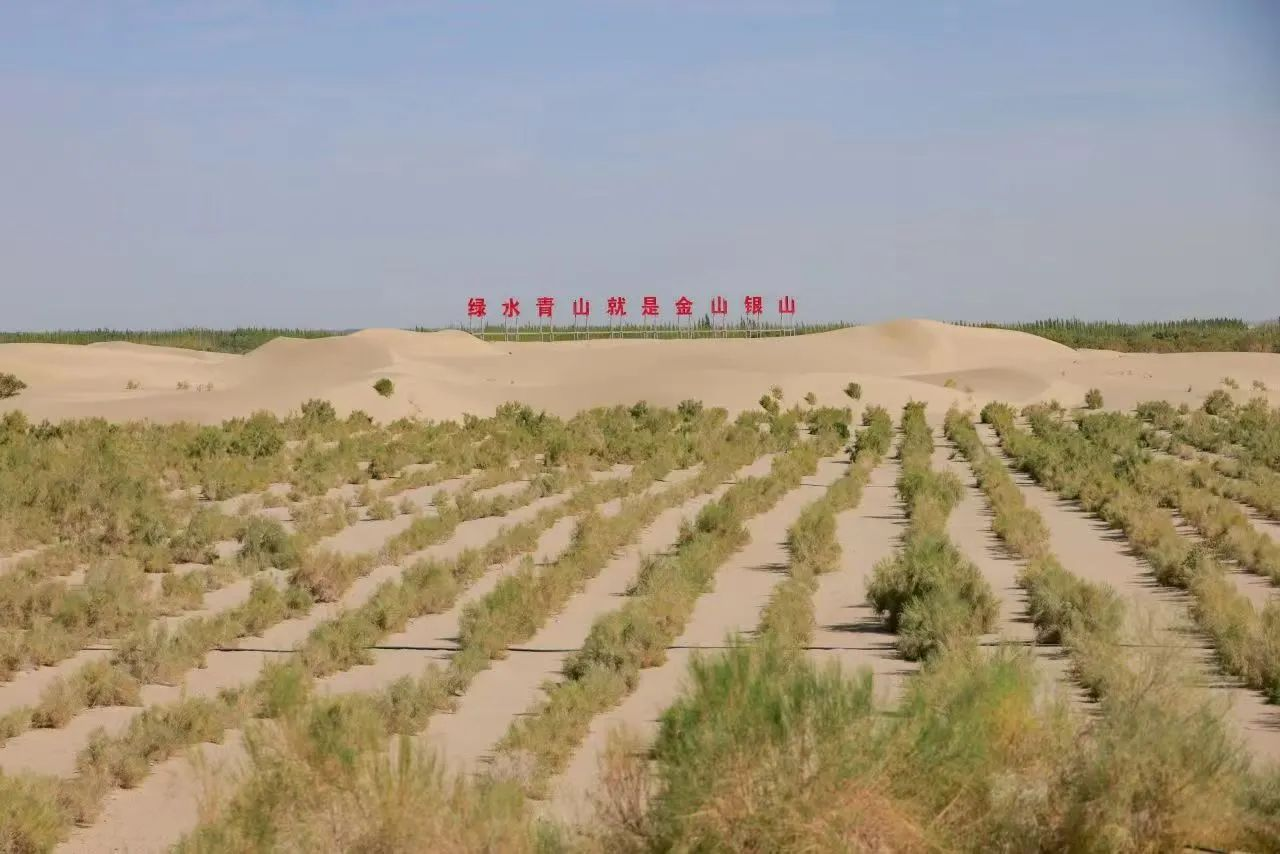
SYSU-supported shelterbelt forest in Maigaiti County
Afforesting desert regions presents a formidable challenge—locals often say, "Keeping a tree alive in the desert is as demanding as raising a child." This work requires the same unyielding perseverance as legendary feats of human resolve.
Planting shelterbelt forests to combat desertification is a legacy project that benefits both current and future generations. Driven by this mission, researchers and staff from SYSU have played a proactive role in advancing the ecological forest initiative in Maigaiti County.

Shelterbelt forest afforestation site in Maigaiti County
Nature rewards those who nurture it
The 1647-acre shelterbelt forest led by SYSU has been fully completed, with 3.6 million trees—including poplars, oleaster, and saxaul—planted across the site. The project’s survival rate exceeds 85%, a significant achievement in desert afforestation.
Leveraging its academic expertise, the university has established the site as a hub for environmental research and education. Scientists and students conduct field studies on sustainable land management, using the forest as a living laboratory to develop solutions for combating desertification. This initiative exemplifies how collaborative ecological efforts can transform arid landscapes into sustainable ecosystems, benefiting both local communities and global environmental goals.

Taklamakan Desert and Makit County's shelterbelt forest: a stark contrast
The ecological forest has not only injected greenery into the desert landscape but also triggered tangible environmental improvements. In Maigaiti County, annual sandstorm days have plummeted from over 150 to fewer than 50, while average rainfall has doubled from 53.6mm to 110mm—transforming a region once defined by choking sandstorms into a habitat where blue skies and flourishing communities now prevail.
Where yellow sand once blotted out the sun and birds had no trees to nest, the area now boasts clear skies and vibrant ecosystems. Local residents report not just ecological recovery but also improved livelihoods, as the shelterbelt forest serves as a living barrier against desertification and a catalyst for sustainable development.
Flourishing on the edge of northwestern China’s desert, this shelterbelt forest symbolizes SYSU’s enduring partnership with the region. Weathering sandstorms, it thrives as a living testament—rooted in scientific stewardship, growing stronger each season to embody nature's resilience and global commitment to sustainable futures.
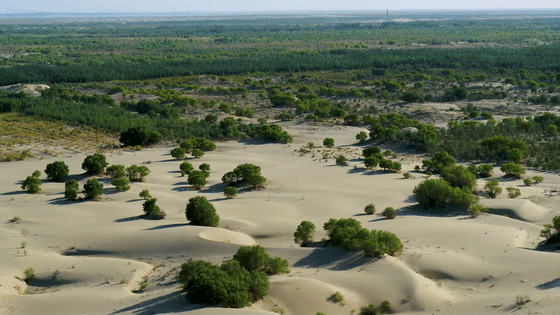
Shelterbelt forest in Maigaiti County